Meet our Invited Speakers

Prof. MURRAY Matthew
Prof. ZOURE Abdou Azaque
Msc, PhD, PhD
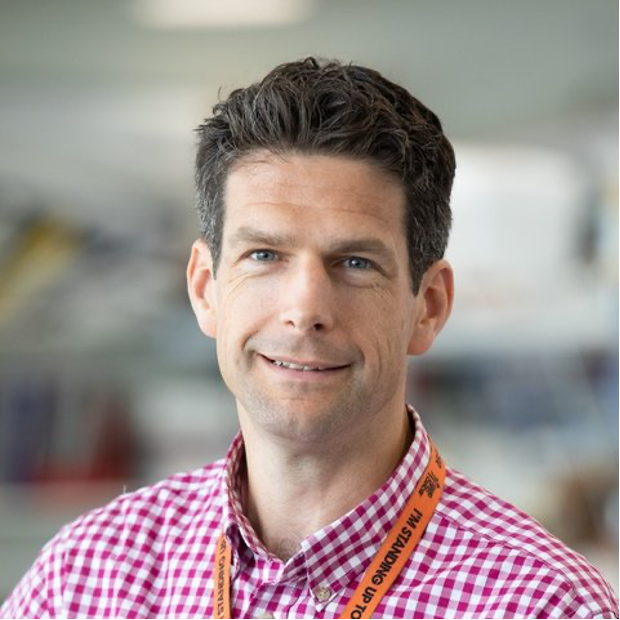
Prof. MURRAY Matthew is a University Professor and Honorary Consultant Paediatric Oncologist, working at both the Department of Pathology, Cambridge University and Department of Paediatric Haematology and Oncology, Cambridge University Hospitals NHS Foundation Trust, United Kingdom. He was appointed in 2012.

His research programme studies the clinical and molecular aspects of cancer, particularly germ cell tumours (GCTs), the leading cause of adult life years lost from cancer, and he also has a specific interest in the benefits of agnostic use of whole genome sequencing for patients with cancer.

He was the first to demonstrate that the miR-371~373 and miR-302/367 clusters were over- expressed in all malignant GCTs, regardless of patient age, sex, tumour site, and/or subtype.

He was also the first to identify the clinical utility of specific circulating microRNAs for diagnosis, disease-monitoring, and early relapse detection in malignant GCTs, the

methodology for which has now been adopted by numerous other research groups globally to replicate the findings.

He has embedded circulating miR-371a-3p testing in international randomised clinical trials, including the CRUK-funded AGCT1531, UKP3BEP, and OTIS-S, as well as the MonoGerm trial for intracranial germinoma, and is moving the assay towards clinical adoption.

He has published >150 manuscripts to date and has attracted ~£9M of grant funding to date as a Principal and Co-Investigator. Professor Murray has key national and international leadership roles in cancer biology, including:

  • ‘MaGIC: Malignant GCT International Collaborative’ (https://magicconsortium.com/), a UK-US led initiative developing international trials of extracranial GCTs in children, adolescents & young adults, including embedded biological aims; Member 2009-. Biology Co-Lead and Executive Committee Member; 2011-2023
  • International Society of Paediatric Oncology (SIOP-Europe) Brain Tumour Group – GCT Subgroup; Member 2009-; Chair 2017-2022
  • 100,000 Genomes Project (GeCIP) Testis Cancer Domain Co-Lead; 2015-
  • Children’s Cancer and Leukaemia Clinical Studies Group, GCT Subgroup; 2010-

Declaration of Interests: Nil

Prof. ZOURE Abdou Azaque
Pr. SOKOL Harry
Msc, PhD, PhD

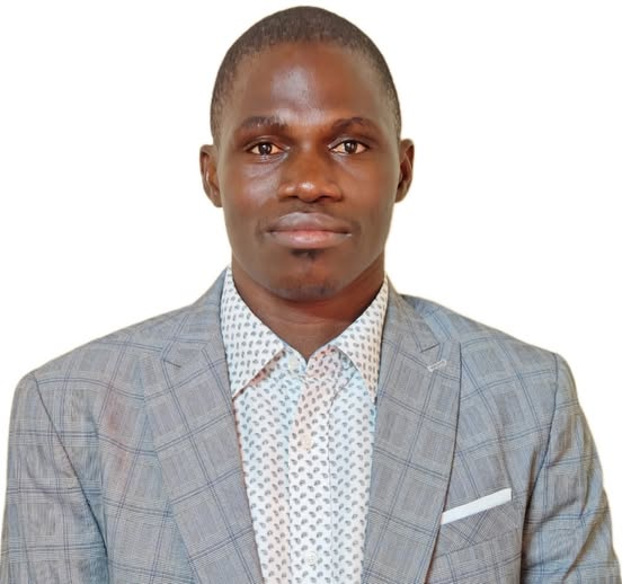
Prof. ZOURE Abdou Azaque is a distinguished senior researcher and Professor of Genetics, Molecular Biology and Genomics, and an expert in genetic risk factors for cancer in Black African populations. He currently serves as a Full Professor at the Research Institute of Health Sciences (IRSS/CNRST), Burkina Faso.

He obtained a PhD in Molecular Genetics and Biology from Mohammed V University of Rabat, Morocco, and a PhD in Biological Engineering (metagenomics and proteomics) from the University of Liège, Belgium, in 2017 and 2020, respectively. He commenced his academic and research career at the IRSS/CNRST, Burkina Faso, where he developed expertise in precision medicine, genomics, genetic risk factors for cancer, genetic disorders, and molecular diagnostics for both communicable and non-communicable diseases.

In 2020, he was appointed Technical Coordinator at the Biomedical Research Laboratory Unit (LaReBio/IRSS/CNRST), and in 2026 he assumed the role of Principal Investigator in several cancer research projects at IRSS/CNRST.

His research has made a substantial contribution to advancing knowledge on genetic risk factors for cancer. Together with his team, he has pioneered key areas of research, including the identification of mutations in the BRCA1, BRCA2, CHEK2, ATM, TP53, PIK3CA, PTEN, AKT1, HLA, and GST genes involved in cancer development; single-cell characterisation of tumour and non-tumour tissues; genomic studies of cancer in patients of African descent, focusing on the characterisation of genetic and molecular factors; epigenetic dysregulation and genetic instability in prostate cancer; the impact of microsatellite instability; and the diagnostic value of circulating microRNAs in breast and prostate cancer incidence among patients in Burkina Faso. His work has generated influential findings that have significantly impacted the field.

Prof. ZOURE has authored numerous high-impact publications and has received several prestigious awards and distinctions, including the Technical Fellowship for Francophone Africa from the Union for International Cancer Control (UICC); the 1435H Excellent Leadership Award from the Islamic Development Bank (IsDB); Principal Investigator (country lead) of the African Caribbean Cancer Consortium (AC3); Principal Investigator (country lead) of the Prostate Cancer Transatlantic Consortium (CaPTC); membership of the AORTIC Research Committee (African Organisation for Research and Training in Cancer); and recognition from the Ministry of Health of Burkina Faso for his contribution to molecular diagnostics during the COVID-19 pandemic.

Prof. ROTIMI Solomon Oladapo
University of Montréal
PhD

Prof. Rotimi Solomon Oladapo is a Professor of Clinical Biochemistry at Covenant University, Nigeria, where he also serves as Research Coordinator at the World Bank–funded Covenant Applied Informatics and Communication African Centre of Excellence (CApIC-ACE).

With over 15 years of experience spanning clinical biochemistry, genomics, biorepository development, and computational drug discovery, his work focuses on how biological and environmental factors intersect to drive cancer disparities in ethnically diverse Black populations in Africa and the diaspora.

He is the global Principal Investigator of the NIH/NCI-supported Prostate Cancer Transatlantic Consortium (CaPTC) and a Multiple Principal Investigator on the United States Department of Defense–funded Inclusive Cancer Care Equity (iCCaRE) for Black Men Consortium.

Prof. Rotimi has led over 30 research projects, including studies on the genomic and immuno-inflammatory mechanisms of prostate cancer in African men, vitamin D-related biology in Black tumours, and the molecular consequences of toxicant exposures such as aflatoxin B1.

A recent focus of his laboratory is addressing the inherited-risk gap in African populations. His team has pioneered work on germline BRCA mutations in Nigerian women with breast cancer, strengthening the case for population-specific genetic counselling, cascade testing, and risk-reduction strategies in settings where these services remain limited. Building on this momentum, his group has also identified a novel germline TP53 mutation, thereby expanding the landscape of hereditary cancer susceptibility in African families.

His scientific career began in environmental toxicology, including the identification of erythrocyte acetylcholinesterase as a surrogate biomarker for lead-induced neurotoxicity, followed by nutraceutical research on anti-inflammatory and antioxidant interventions.

His contributions have been recognised with several honours, including a Fulbright Visiting Scholar Fellowship and the AACR African Cancer Researchers Travel Award. Through his leadership, Prof. Rotimi is shaping the future of cancer research and precision medicine in Africa by combining rigorous scientific discovery with practical translation, advancing precision cancer care for Black populations globally.

ChatGPT_Image_10_juin_2026__12_16_01-removebg-preview
Prof. KHATTAB Mohammed
MD, PhD

Prof. KHATTAB Mohammed  is a distinguished [clinical specialty/profession] and expert in [scientific field/expertise], currently serving as Full Professor at [University/Institution]. [He/She] obtained [his/her] [medical/scientific degree] in [year] and commenced [his/her] academic and research career at [Institution, Country], where [he/she] developed expertise in [field(s) of specialisation].

In [year], [he/she] was appointed [current or major position] at [Institution/Unit], and in [year] assumed the role of [current leadership role/title] at [Programme/Centre/Institution].

[His/Her] research has made a substantial contribution to the advancement of [main research field(s)]. Together with [his/her] team, [he/she] has pioneered key concepts, including [major discoveries/contributions], and has generated influential findings that have significantly impacted the field.

Prof. [LAST NAME] has authored numerous high-impact publications and has been recognised with several prestigious awards and distinctions, including [major awards/distinctions].

Prof. ERRIHANI Hassan
MD

Prof. ERRIHANI Hassan is a distinguished [clinical specialty/profession] and expert in [scientific field/expertise], currently serving as Full Professor at [University/Institution]. [He/She] obtained [his/her] [medical/scientific degree] in [year] and commenced [his/her] academic and research career at [Institution, Country], where [he/she] developed expertise in [field(s) of specialisation].

In [year], [he/she] was appointed [current or major position] at [Institution/Unit], and in [year] assumed the role of [current leadership role/title] at [Programme/Centre/Institution].

[His/Her] research has made a substantial contribution to the advancement of [main research field(s)]. Together with [his/her] team, [he/she] has pioneered key concepts, including [major discoveries/contributions], and has generated influential findings that have significantly impacted the field.

Prof. [LAST NAME] has authored numerous high-impact publications and has been recognised with several prestigious awards and distinctions, including [major awards/distinctions].

Prof. LKHOYAALI Sihame
MD

Prof. LKHOYAALI Sihame is a distinguished [clinical specialty/profession] and expert in [scientific field/expertise], currently serving as Full Professor at [University/Institution]. [He/She] obtained [his/her] [medical/scientific degree] in [year] and commenced [his/her] academic and research career at [Institution, Country], where [he/she] developed expertise in [field(s) of specialisation].

In [year], [he/she] was appointed [current or major position] at [Institution/Unit], and in [year] assumed the role of [current leadership role/title] at [Programme/Centre/Institution].

[His/Her] research has made a substantial contribution to the advancement of [main research field(s)]. Together with [his/her] team, [he/she] has pioneered key concepts, including [major discoveries/contributions], and has generated influential findings that have significantly impacted the field.

Prof. [LAST NAME] has authored numerous high-impact publications and has been recognised with several prestigious awards and distinctions, including [major awards/distinctions].

Abouqal Redoue
Prof. ABOUQAL Redouane
MD

Prof. ABOUQAL Redouane is a distinguished [clinical specialty/profession] and expert in [scientific field/expertise], currently serving as Full Professor at [University/Institution]. [He/She] obtained [his/her] [medical/scientific degree] in [year] and commenced [his/her] academic and research career at [Institution, Country], where [he/she] developed expertise in [field(s) of specialisation].

In [year], [he/she] was appointed [current or major position] at [Institution/Unit], and in [year] assumed the role of [current leadership role/title] at [Programme/Centre/Institution].

[His/Her] research has made a substantial contribution to the advancement of [main research field(s)]. Together with [his/her] team, [he/she] has pioneered key concepts, including [major discoveries/contributions], and has generated influential findings that have significantly impacted the field.

Prof. [LAST NAME] has authored numerous high-impact publications and has been recognised with several prestigious awards and distinctions, including [major awards/distinctions].

Prof. BELAYACHI Jihane
MD

Prof. BELAYACHI Jihane is a distinguished [clinical specialty/profession] and expert in [scientific field/expertise], currently serving as Full Professor at [University/Institution]. [He/She] obtained [his/her] [medical/scientific degree] in [year] and commenced [his/her] academic and research career at [Institution, Country], where [he/she] developed expertise in [field(s) of specialisation].

In [year], [he/she] was appointed [current or major position] at [Institution/Unit], and in [year] assumed the role of [current leadership role/title] at [Programme/Centre/Institution].

[His/Her] research has made a substantial contribution to the advancement of [main research field(s)]. Together with [his/her] team, [he/she] has pioneered key concepts, including [major discoveries/contributions], and has generated influential findings that have significantly impacted the field.

Prof. [LAST NAME] has authored numerous high-impact publications and has been recognised with several prestigious awards and distinctions, including [major awards/distinctions].

ChatGPT_Image_10_juin_2026__12_16_01-removebg-preview
Prof. LAMALMI Najat
MD
1st INTERNATIONAL SYMPOSIUM ON CIRCULATING BIOMARKERS IN ONCOLOGY
Contact Us

Email:
ISCBO@cm6.ma

Organizing Institutions: CM6RI – UM6SS